Commercial Sewage Cleanup in Greenfield, IN
Greenfield property managers get a documented sewage scope, verified drying, and a record that stays in the building file.
When Greenfield homeowners need Commercial Sewage Cleanup, Greenfield Water Restoration responds 24/7 with certified technicians, fast equipment deployment, and claim ready documentation. Call (765) 676-3491 for immediate dispatch.
- Service: Commercial Sewage Cleanup for Greenfield homeowners
- Service area: Greenfield, IN and surrounding areas
- Response time: Rapid emergency dispatch for Greenfield inquiries; crews available 24/7
- Licensed and insured (License #RC21100059)
- Serving Greenfield, IN since 2018
Commercial Sewage Cleanup for Greenfield Businesses
Sewage backing up through a restroom block puts two problems in front of you at the same time. The contamination has to come out, and the people who work in that building have to stay clear of it while the work runs. Greenfield Water Restoration dispatches a crew to commercial sewage losses in Greenfield within 2 hours, with extraction equipment, containment materials, and the documentation your building file and your carrier will both want.
Where an upper floor restroom sits above a ceiling grid, the crew lifts tiles and checks the insulation and the deck with a thermal camera and a moisture meter. Small inspection openings at the base of walls show what the studs and cavity insulation are holding. Each opening gets logged in the Greenfield job file so the repair scope can point back to it.
Odor on a sewage job is a symptom of contamination still being present, so Greenfield Water Restoration crews treat the source before anything gets deodorized. Once the soil load is gone and the structure is dry, remaining odor gets handled with HEPA filtration, targeted cleaning of the surfaces holding it, and sealing of semiporous substrates where that's appropriate. Masking agents over contamination that's still wet get skipped on those jobs.
On a leased space, the question of who pays usually comes down to the lease language about the building's plumbing. Greenfield Water Restoration writes the file so the owner, the tenant, and both carriers can read the same facts: where the failure was, where the water went, what was contaminated in each area, and what it took to clean it. The allocation stays between the parties and their carriers.
The cleanup is also the right moment to ask about preventing a repeat. Greenfield Water Restoration records where the water came from at your Greenfield building, and that record helps your plumber talk through backwater valves and line maintenance. Call to get the contaminated area handled first and the prevention conversation started alongside it.
Signs You Need Commercial Sewage Cleanup
If you notice any of these in your Greenfield building, schedule a free inspection before the issue worsens.
Drywall and base trim going soft along the bottom few inches of a restroom wall
Water in a below grade storage room after the building ran heavy restroom or kitchen use
Greasy water pooling around the floor sink under a three compartment sink
Staining or weeping around the bolts on an ejector pit cover
Floor drains gurgling whenever a mop sink, a dishwasher, or a restroom fixture runs upstairs
Toilets in more than one restroom overflowing at the same time
A cleanout cap pushed loose, or water pooling around a cleanout in a mechanical room
A lift station alarm that logged overnight with nobody on site to answer it
Tenants on more than one floor reporting the same odor within a day of each other
Walk in cooler floor drain backing up into the cooler
How Greenfield Water Restoration Handles Commercial Sewage Cleanup
We follow these steps in order on every Greenfield job.
Containment and Access Control
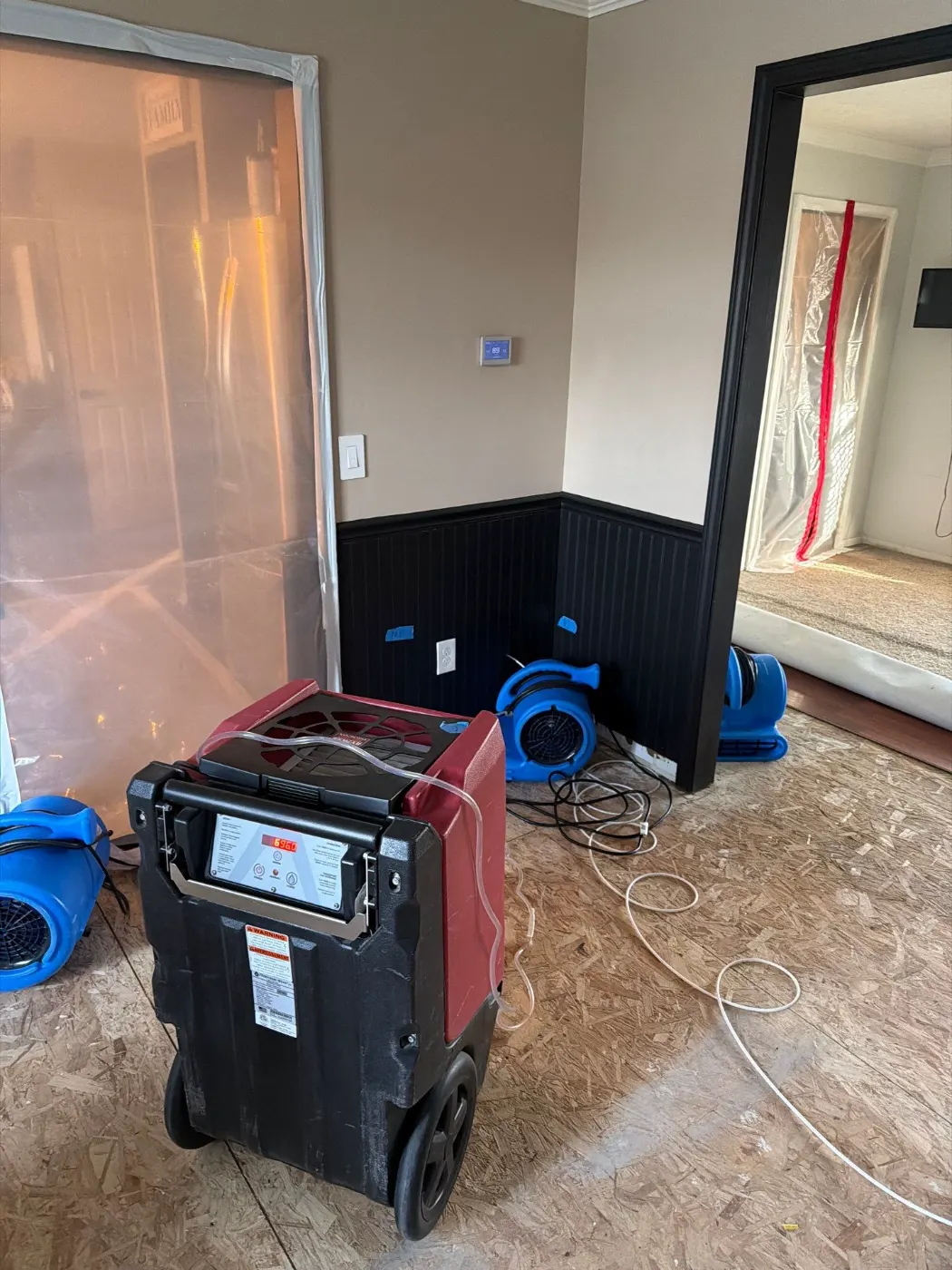
Crews build 6 mil poly barriers with zipper entries around the affected area, seal the HVAC openings serving it, and put the zone under negative pressure with HEPA air scrubbers. Entry is limited to crew in PPE for the rest of the job.
Moisture Mapping and Cut Lines
Once the standing waste is out, meters and a thermal camera trace the wet edge across floors and walls. The crew marks cut lines on the walls from those readings and photographs each mark before demolition begins.
Daily Monitoring
A technician returns every 24 hours through the drying phase, logs readings at fixed locations, repositions equipment as the wet zones shift, and photographs any change in scope. The property manager gets an update on progress and what is left.
Air Cleaning and Odor Check
HEPA air scrubbers run until the last surface is cleaned, then get switched off for an odor walkthrough of the closed space. Lingering odor sends the crew back to the material still holding it.
Reconstruction Scoping
Once the space is dry and verified, the rebuild gets scoped on its own: drywall, insulation, flooring, base, paint, and casework priced against what came out. Greenfield Water Restoration handles the rebuild, and you approve that scope separately.
Commercial Sewage Cleanup in Greenfield
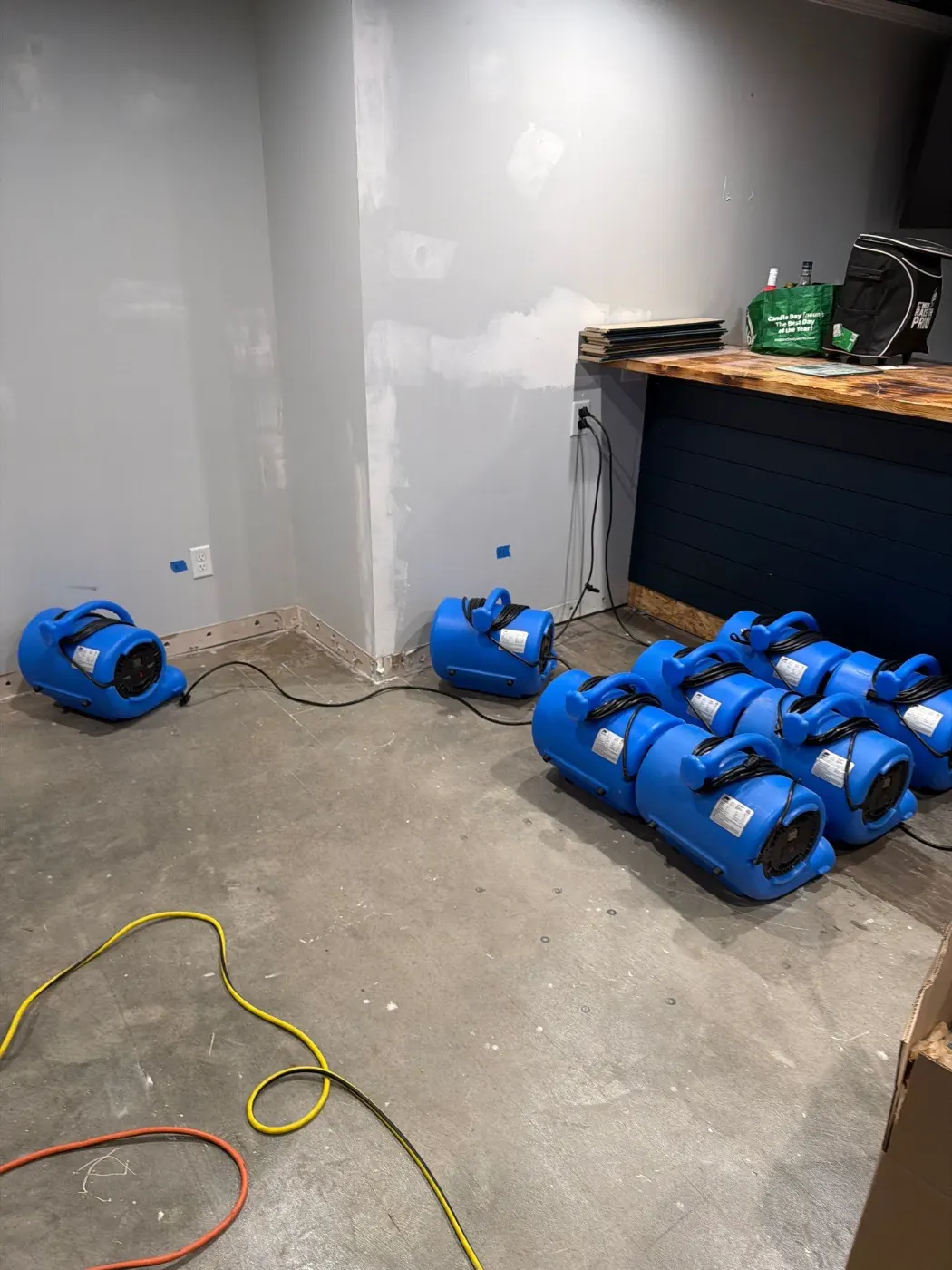
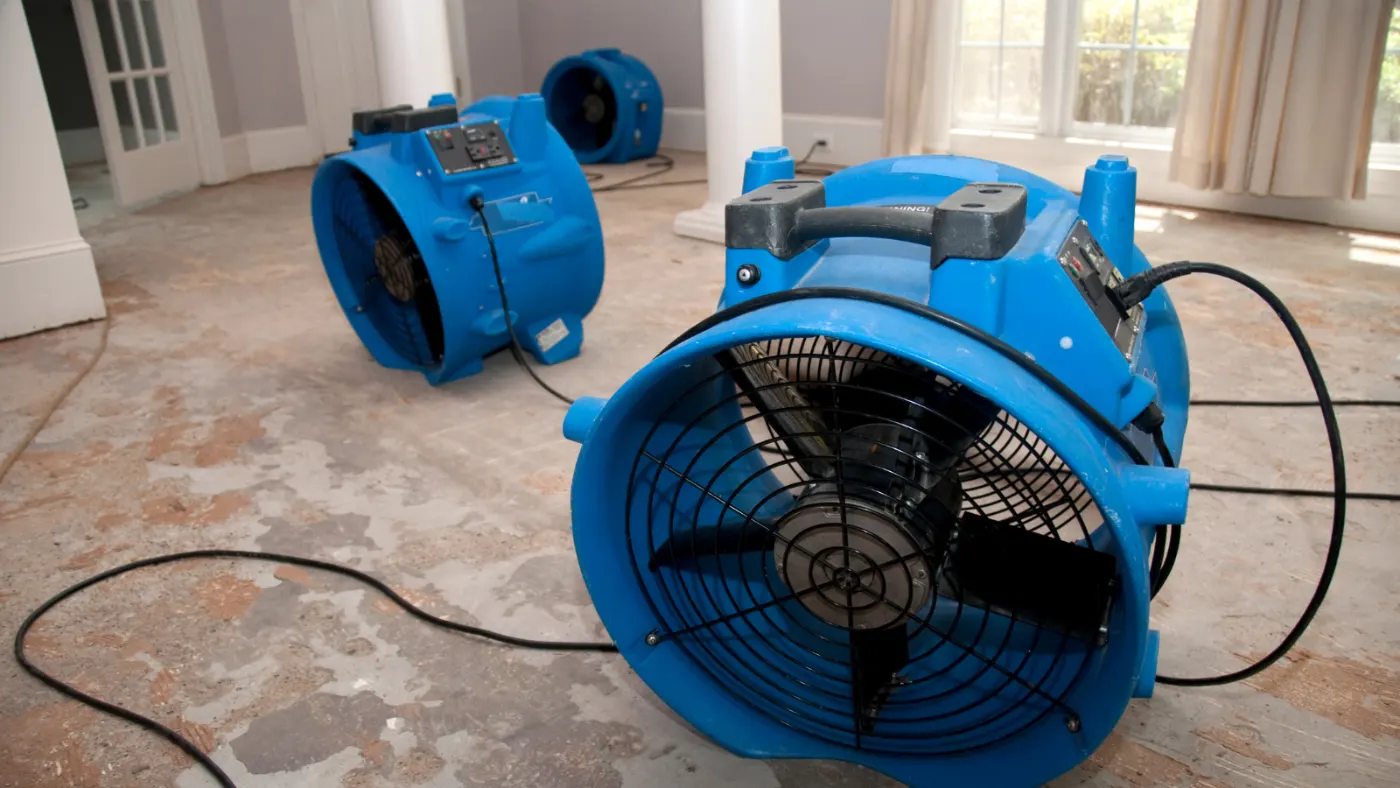
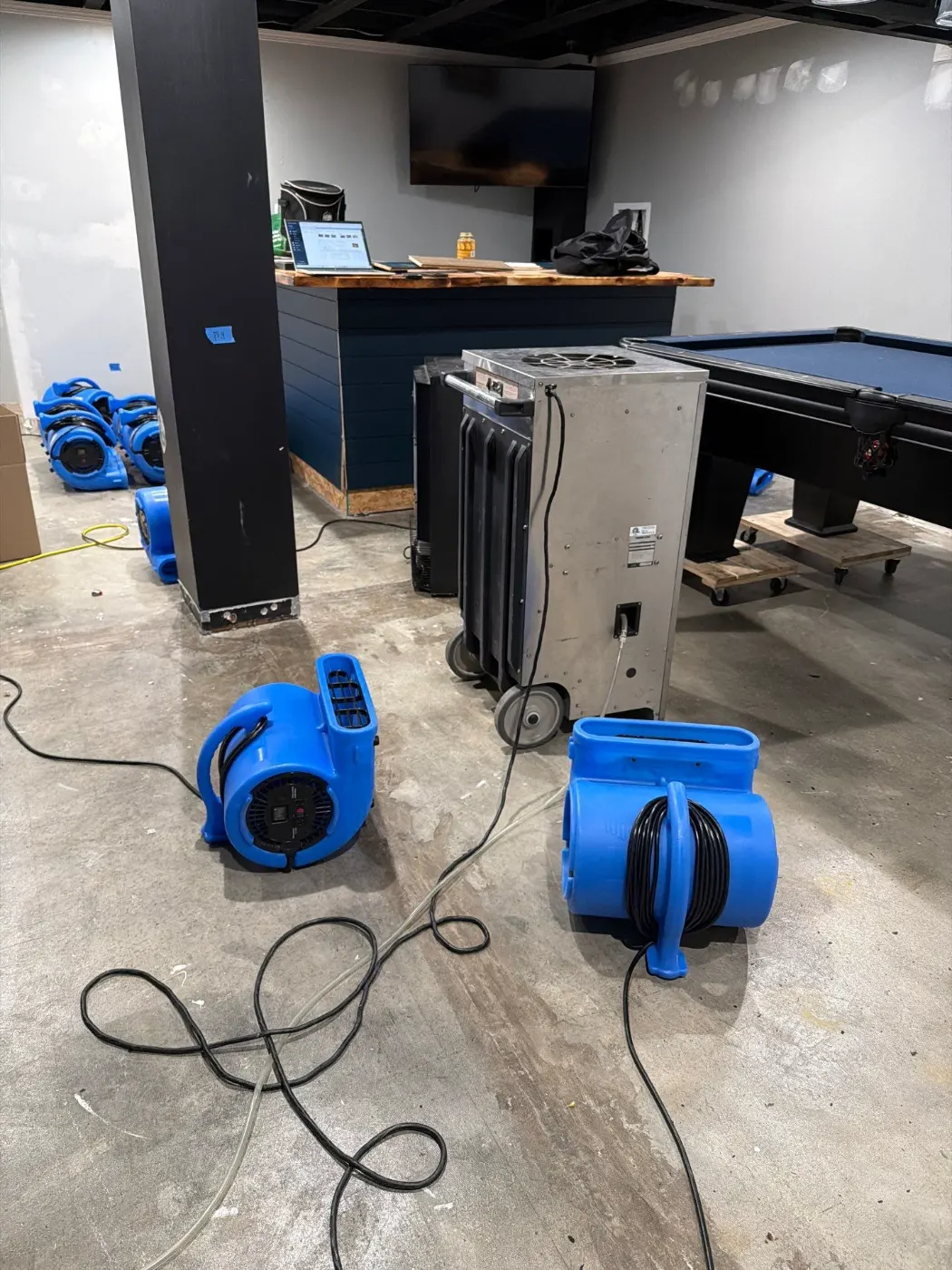
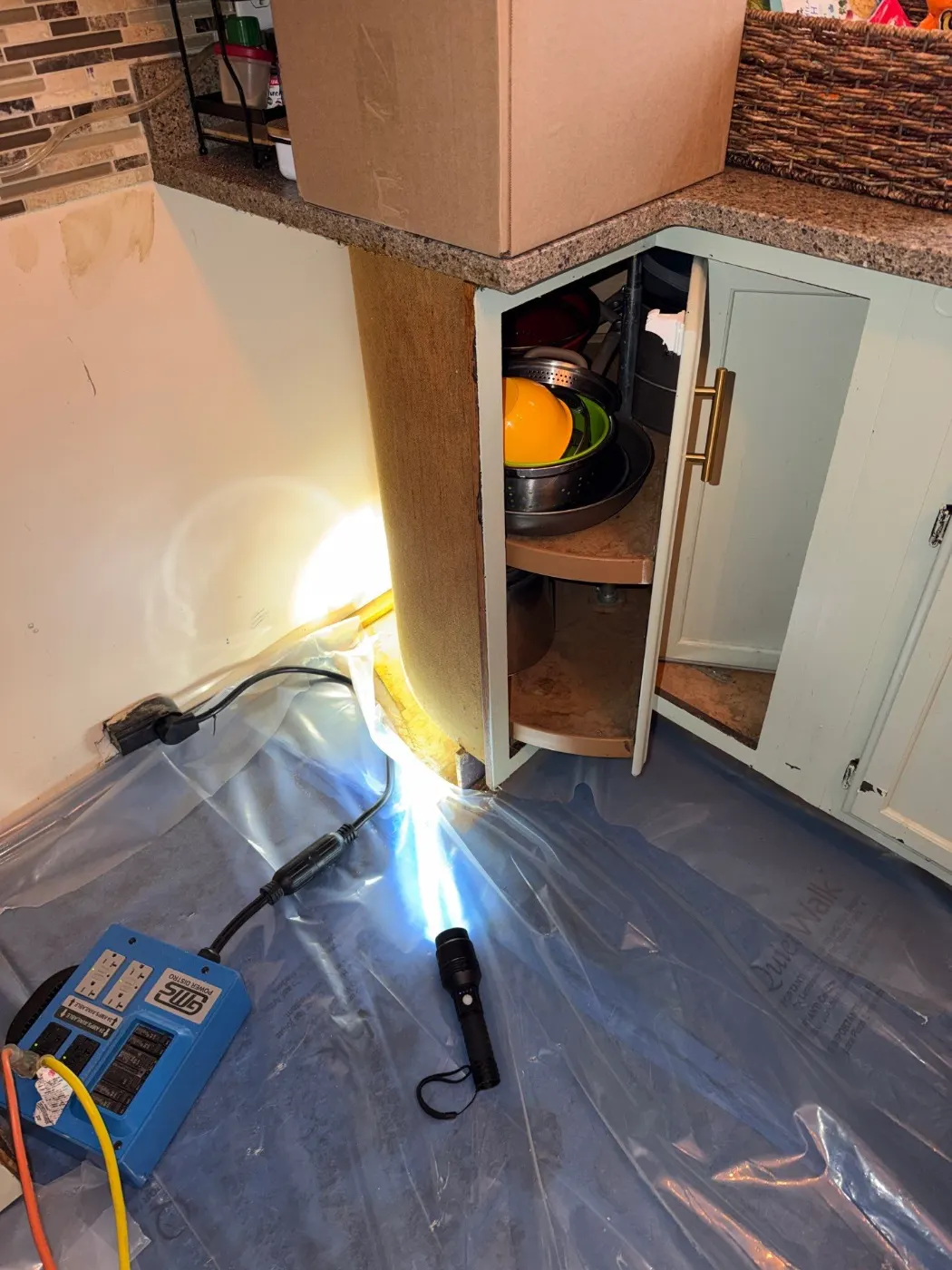
Photographs from real commercial sewage cleanup jobs completed by our crew in Greenfield and surrounding areas.
Commercial Sewage Cleanup FAQ
Questions Greenfield property managers ask us about commercial sewage cleanup.
Guidance and Standards for Commercial Sewage Cleanup
- The ANSI/IICRC S500 is the published standard for professional water damage restoration. The current edition is the Fifth Edition, 2021. IICRC S500 Standard
Greenfield Neighborhoods We Serve
We take commercial sewage cleanup calls in every part of Greenfield. Pick your neighborhood for local details.
Other Restoration Services in Greenfield
Greenfield Water Restoration handles the full scope of restoration work. Explore our other services below.
Water Damage Restoration in Greenfield
24/7 emergency response. IICRC certified water restoration from extraction to full dry out.
Learn more →Basement Flooding in Greenfield
Basement water emergencies handled fast. Extraction, drying, mold prevention.
Learn more →Sewage Cleanup in Greenfield
Category 3 biohazard cleanup. Full containment, decontamination, structural restoration.
Learn more →Request Commercial Sewage Cleanup
Reach Us Directly
Our team is available 24/7 for emergencies and ready to schedule inspections during business hours.
Need Immediate Help?
For active water or mold emergencies, call us directly. We are available 24/7.